

Why Physical Education Matters
In Pakistan, education is often measured by exam results, rote learning, and academic achievement. Yet, one critical yet frequently overlooked component of holistic learning is: physical education (PE). Beyond simply “playing games,” PE contributes to the mental, physical, and social development of children, supporting focus, teamwork, leadership, and emotional well-being. Despite this, PE is often reduced to an optional or peripheral activity, especially in government schools where periods for sports are cut or phased out after lower primary levels. Moreover, the situation of the majority of low-cost private schools, is even worse, with no space for physical activities.
A Personal Journey in Sports and Education
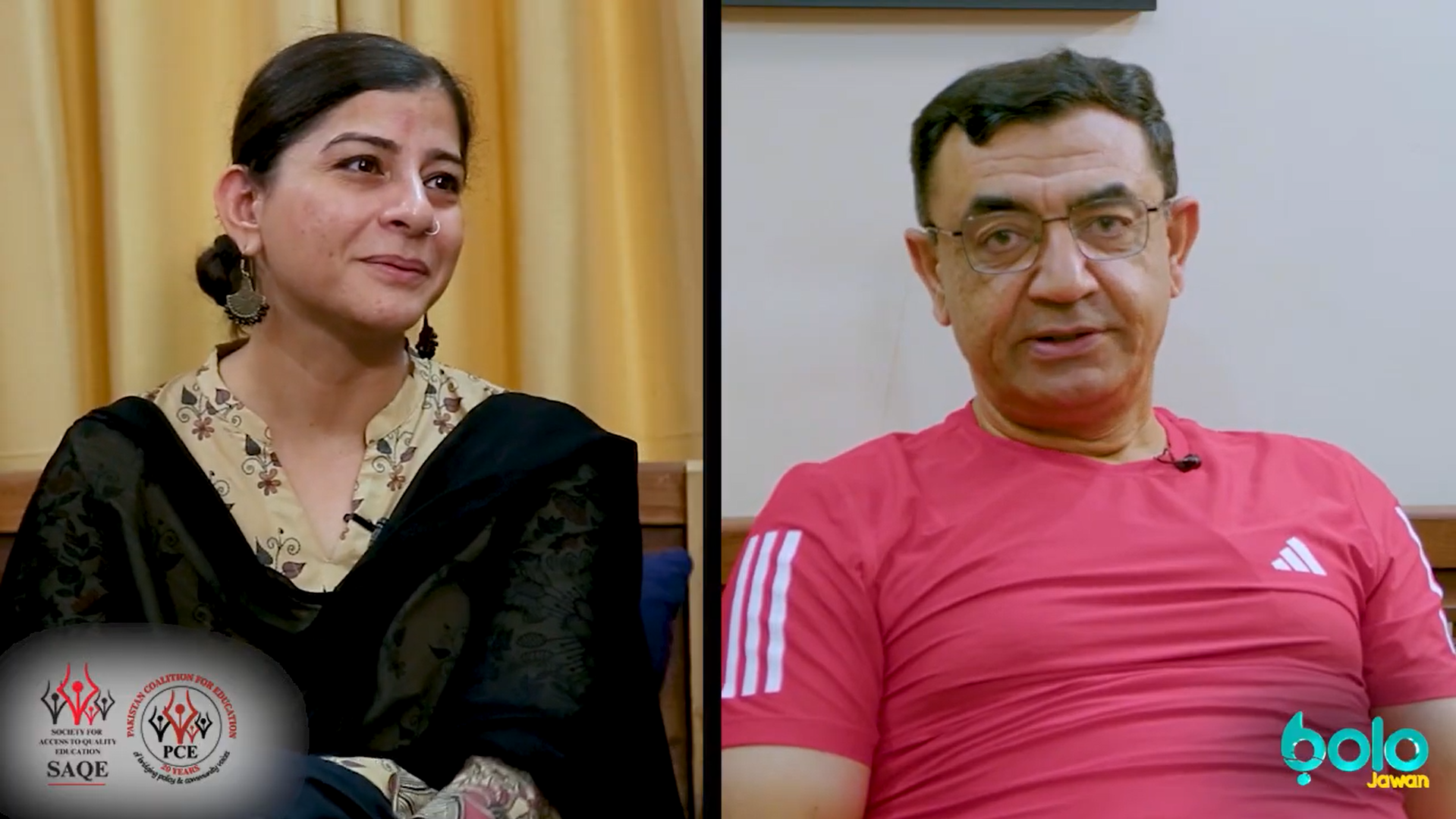
In Episode 7 of Season 4 of Let’s Talk Education, host Areebah Shahid spoke with Major Sajid Hussain, a national advocate for physical education and sports, to explore the critical role of PE in Pakistan’s schools. Major Sajid’s own story is a testament to the transformative power of physical activity. From his school days in Abbottabad to Cadet College Razmak, and later the Military Academy and MBA at Iqra University, Sajid balanced top-tier academic achievement with a lifelong passion for sports.
“Sports is everything for me. It complemented my academics and shaped my personality, leadership, and resilience,”
– Major Sajid Hussain
He went on to promote adventure sports across Pakistan, developing the Khanpur Dam as a hub for water sports, paragliding, and archery, and establishing Shaheen Archery club in Islamabad. His journey demonstrates that physical education is more than a hobby; it is an essential pillar of holistic growth, physical and emotional well-being.
Challenges in Schools: PE as an Afterthought
Despite its proven benefits, PE is rarely integrated into school curricula as a core subject. Major Sajid highlighted that most schools in Pakistan, both public and private, lack qualified PE teachers, structured programs, and inter-school competitions. Parents, too, often prioritize academics over sports, sometimes leaving children to choose whether to participate at all, rather than guiding them through structured exposure to multiple activities.
“Academics dominate at home and in schools, but sports is left optional. Children miss out on leadership, teamwork, and resilience.”
– Sajid Hussain
Governance and Infrastructure Gaps
On a systemic level, the lack of PE is tied to governance and policy shortcomings. Sajid pointed out that the national sport’s infrastructure has collapsed, with hockey grounds abandoned and no cohesive strategy to develop or utilize school playgrounds. Government departments and sports federations often work in silos, leaving young athletes without guidance, recognition, or opportunity.
“Our infrastructure is underused, and without vision or policy, even schools with large grounds fail to provide proper physical education,”
Major Sajid HussAin
He emphasized the need for a comprehensive approach, involving experts, psychologists, parents, educators, and government officials to create a structured, integrated PE framework that goes beyond sporadic sports periods.
The Way Forward: Integrating PE for Holistic Development
Sajid’s vision extends beyond individual sports to systemic change. By mobilizing institutions like the Pakistan Boy Scouts Association, strengthening national sports federations, and integrating PE into daily school life, Pakistan can nurture not just athletes, but well-rounded, disciplined, and socially competent students.
“Physical education does not take away from academics; it enhances it. Mind and body go together, and that’s how students truly thrive,”
Major Sajid Hussain
For parents, educators, and policymakers alike, the episode stresses the importance of giving children structured, guided exposure to sports, while ensuring PE is recognized as a fundamental part of education, not a supplementary activity.
Physical education is not a luxury—it is a necessity for holistic education. Sajid Hussain’s personal journey and insights illuminate the potential of PE to transform students’ lives, foster leadership and teamwork, and improve learning outcomes. As Pakistan seeks to strengthen its education system, integrating physical education at all levels is a step toward producing healthier, sharper, and more resilient generations.
Watch the full episode now!


. Beyond simply “playing games,” PE contributes to the mental, physical, and social development of children, supporting focus, teamwork, leadership, and emotional well-being.)