

Why are the Performing Arts Essential?
A crucial element is often absent from our schools, where math and science often reign supreme. The performing arts, including dance, theatre, and music, are often dismissed as frivolous occupations, relegated to the margins of what society deems real education. Yet this dismissal profoundly costs our children’s development and cultural identity.
Performing Arts as a Tool for Resistance and Social Change
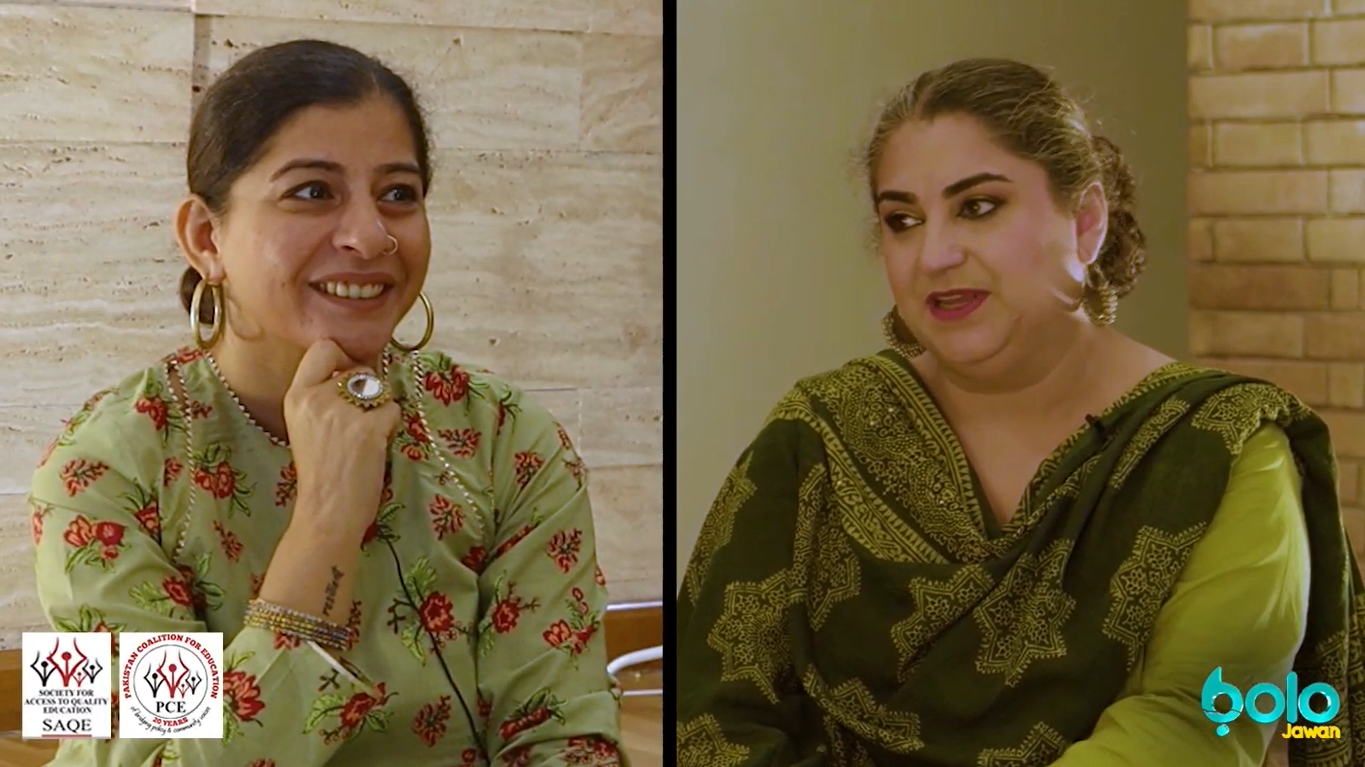
In Episode 5 of Season 4 of Let’s Talk Education, the discussion centered around this theme. The podcast series, a collaboration between the Pakistan Coalition for Education and Bolo Jawan, explores the critical role of performing arts in the country’s education system. Zainab Dar, at just eight years old, found herself in a police station after performing street theatre with her father about child marriage. This moment crystallized her understanding that art could be a powerful force for social change. “After that theatre (performance), I realized I might be doing something right,” she reflects.
Cultural Taboos and Resistance to the Performing Arts
The resistance she encountered reflects a broader cultural and religious taboo that continues to shadow the performing arts in Pakistan. Parents, teachers, and institutions fail to recognize what educators worldwide have long understood: the arts are not supplementary to education; they are fundamental to it. Zainab emphasized, “Kathak, theatre, or music, these are not distractions from learning; they are deeper lessons in focus, resilience, and joy.” As Einstein famously observed, there is no concept of science without the arts, a truth that Pakistani educational paradigms have yet to embrace. Similarly, Zainab claims, “A society that treats performing arts as taboos forgets that they are the oldest languages of humanity.”
“Kathak, theatre, or music, these are not distractions from learning; they are deeper lessons in focus, resilience, and joy.”
Zainab Dar
The Cognitive, Emotional, and Social Benefits
The benefits of performing arts education extend far beyond creative expression. In fact, these disciplines develop critical cognitive abilities that serve students throughout their lives. Regular practice delays conditions like Alzheimer’s disease and dementia by keeping your mind active and agile. The mathematical precision required in dance and music strengthens analytical thinking, while the physical demands improve body structure, stamina and motor skills. Zainab says, “Performing arts teach us to be as alert as a crow, as patient as a crocodile, and as hopeful as a child.”
Perhaps most importantly, performing arts provide children with emotional literacy and tools to constructively understand and channel their feelings. As Zainab explains, “When we fail to give structure to emotions, they will misfire. Where there is anger, there will be silence. Where there is love, there will be fights.”
Reconnecting with our Roots and Heritage
“Our heritage, our idioms, our stories, when children are cut off from them, they are cut off from themselves,”
Zainab Dar
According to Zainab, we can rebuild by prioritizing our heritage and roots over the westernized glossing of our lives. The tragedy lies in what we deny our children and what we lose as a society. “Our heritage, our idioms, our stories, when children are cut off from them, they are cut off from themselves,” Zainab reveals. Alienating arts and theatre disconnects children from their heritage, their stories, and their very roots.
The solution isn’t complicated. Schools that mandate physical education can incorporate performing arts. Excluding the performing arts from our education system solely because they do not offer a viable career option is problematic. It prevents us from delivering a holistic education to our children because performing arts can make our children more socio-emotionally aware, better human beings, and responsible citizens.
A More Holistic Education
The time has come to recognize that education is incomplete without the arts. The children of Pakistan deserve more than the narrow confines of rote learning. They deserve the tools to become fully realized human beings, equipped with knowledge and the emotional intelligence, creativity, and cultural grounding that only the performing arts can provide. Hence, the question isn’t whether we can afford to include the arts in education; it’s whether we can continue to leave them out.
Watch the full episode now!


