
In Pakistan, around 25 million children remain out of school, while millions more who are enrolled struggle with inadequate learning outcomes. This learning crisis not only undermines children’s futures but also contributes to the country’s declining human development indicators. Despite literacy being defined as the ability to read, write, and perform basic arithmetic, a large share of Pakistan’s population aged 10+ still lacks these skills.
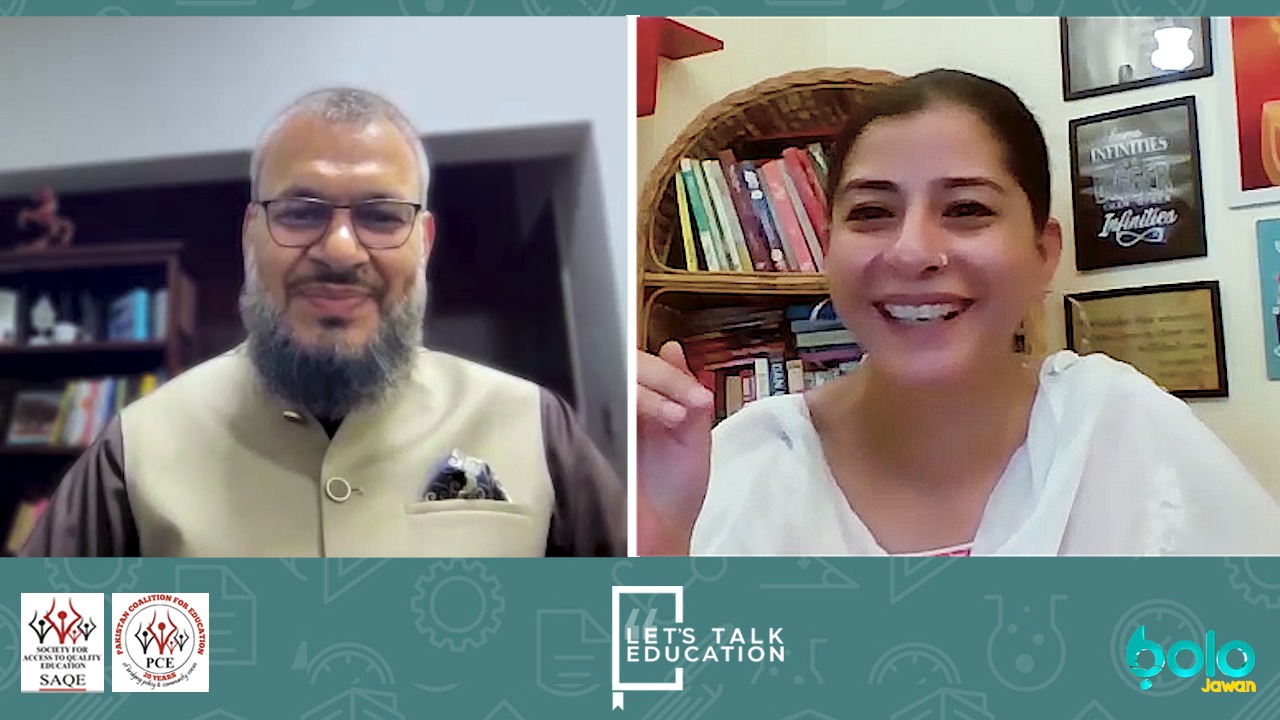
In the third episode of Let’s Talk Education podcast season 04, produced in collaboration with the Society for Access to Quality Education (SAQE), Abid Gill, Deputy Chief Advisor at Japan International Cooperation Agency (JICA) explains, “In Pakistan, 25 million children do not have basic education. But an equally alarming challenge is that 45 million children in schools are not learning as they should.”
To address this pressing challenge, JICA, in collaboration with the Government of Pakistan, has introduced the Advancing Quality Alternative Learning (AQAL) programme. Through AQAL, children are offered an accelerated learning pathway that enables them to quickly acquire foundational literacy, numeracy, and essential life skills, while also gaining access to quality education tailored to their needs. At the heart of this initiative lies Middle Tech, a ground-breaking model that integrates accelerated education with vocational skills training.
What is Middle Tech?
Middle Tech is designed to provide an equivalent education of grades 6, 7, and 8 within 18 months, while simultaneously equipping learners with marketable skills. According to Gill, “Middle Tech has three unique features: it offers accelerated education, integrates vocational skills, and is flexible in delivery—it can be offered in communities, schools, madaris, marketplaces, or even through hybrid models.”
Approved by provincial governments and backed by a certification mechanism, Middle Tech ensures that learners not only receive recognized credentials but also practical skills that directly enhance their employability.
Marketable Skills
The programme currently offers 13 in-demand skills, tailored to local contexts and labour market needs. These include graphic design, media production, dressmaking, beautician services, plumbing, air conditioning, hotel management, tourism management, agriculture, and livestock management.
“We designed the curriculum to be relevant to students’ needs,” Gill explains. “With very small efforts, you can make young people self-reliant. Alongside these skills, we also provide modules on entrepreneurship, budgeting, and digital literacy so they can start earning right away.”
This relevance makes education meaningful for families living below the poverty line, who often see little economic benefit in traditional schooling.
Breaking Gender Norms
One of the most promising aspects of Middle Tech is its potential to empower young women. Traditionally excluded from technical education, girls are increasingly taking part in skill-based programs. Gill highlights, “The traditional mindset that women cannot learn these skills is slowly breaking. If the income of a poor family improves, the immediate effect is on their children’s education.”
Hybrid and community-based learning models also make it easier for girls to participate, especially in rural areas where access and safety are major concerns.
Early Results and Future Plans
The pilot phase of Middle Tech has already shown encouraging results. “Dropout rates were very low,” Gill notes. “Students told us this is exactly what they wanted to learn, and the flexible structure—only two days a week in-person—made it possible for them to continue.”
The Sindh government has already introduced the programme in 300 schools, with plans to scale it up to 1,500 schools. Other provinces, including Punjab, KP, and Balochistan, are also expanding their non-formal education departments to integrate Middle Tech.
Middle Tech as a Hope
By blending education with employability, Middle Tech offers a pathway of hope for millions of out-of-school children and struggling learners. As Gill emphasizes, “We need more programmes like Middle Tech to provide shorter, flexible, and relevant education pathways for our youth to improve development indicators of the country whether that is health, economy, or social development.”
For Pakistan’s children and young people, especially those left behind by the formal system, Middle Tech is more than a programme—it is a lifeline to dignity, opportunity, and a brighter future.
Watch the full episode Now!


