

During the Let’s Talk Education podcast, we have repeatedly highlighted the fact that Pakistan has the largest population of out-of-school children in the world- 25.2 million.
While the crisis of OOSC needs urgent policy action, it is equally important to discuss the current condition of public schools and how to improve the quality of education that is being provided.
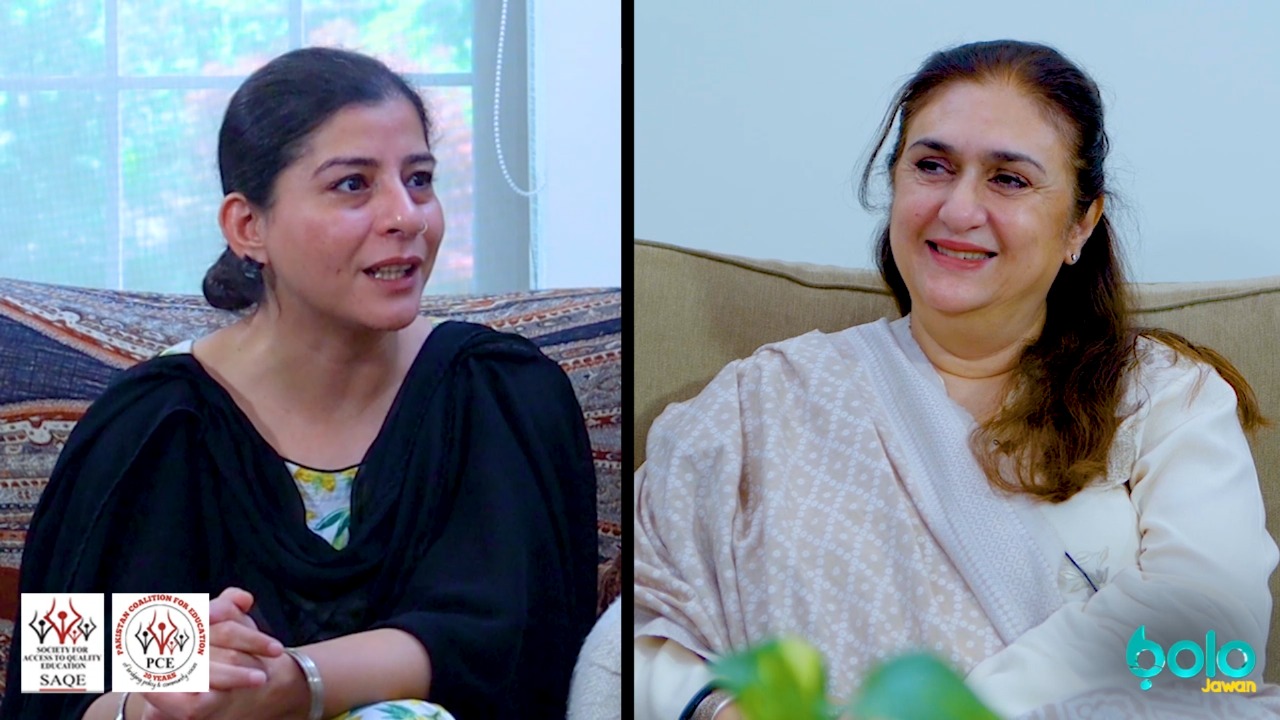
In Episode 4 of Season 4 of Let’s Talk Education, our host and Executive Director, PYCA, Areebah Shahid sat down with Rahat Rizwan, Senior Coordinator for Education and Early Childhood Development at the International Rescue Committee (Pakistan), to discuss how to improve the existing education infrastructure of Pakistan, focusing on a niche often ignored by policy makers- early childhood development. Rahat Rizwan has extensive experience in different areas of education; from first-hand teaching experience to working with public-private partnerships to revitalize failing schools in underserved areas across Pakistan.
What are failing schools?
“Failing schools are schools that the community has rejected.”
According to Rahat, a key indicator of a failing school is that parents opt not to send their children to that school. There could be several reasons for this, including:
- A shortage of teachers or teachers’ absenteeism
- Insufficient number of female teachers in a girls’ school
- Delipidated or damaged school infrastructure
- Lack of a proper WASH facility
- Consistently poor student learning outcomes
The process of revitalizing such a school usually takes about 6 to 12 months. However, for a school to grow and develop to the point where it is sustainable on its own, it takes at least 4 years.
The right to education has been enshrined in the Constitution of Pakistan in Article 25A, making the state responsible for providing free, compulsory, and quality education to children aged five to sixteen. Hence, rehabilitating failing schools is an essential way of combating the education emergency in Pakistan.
Importance of ‘Early Childhood Development’
Another crucial topic discussed during the podcast was the concept of ‘early childhood development’ (ECD) and the vital role this phase plays in a child’s life. Early childhood development starts from the prenatal phase and lasts till the child is 8 years old.
According to Rahat, “early childhood development starts as soon as the baby is conceived and involves providing the pregnant woman with any kind of psycho-social support she needs.”
“Children’s brains are built, moment by moment, as they interact with their environments.” Hence, healthy nutrition, parental love, and a secure and safe home environment are crucial for the baby to develop into a healthy adult, physically, emotionally, and mentally. Once the child turns 3 years old and starts attending school or nursery, the education sector assumes a significant developmental role in the child’s life.
“A child’s entire life is based on the foundation that is laid down during the first 8 years of their life, as their brain is continuously developing during this time. “
Unfortunately, in Pakistan, ECD is not given the due importance due to several reasons. One major factor is the lack of resources. According to the Pakistan Education Statistics Report of 2022-23, the national average of the teacher-pupil ratio is 38, at the primary level. This means that one teacher is responsible for twice the number of manageable children, leaving little room for specialized learning required during early childhood development.
However, Rahat is still hopeful. UNICEF and the World Bank have launched pilot ECD programs. But the problem remains whether the country has enough resources and political will to scale up these programs. Especially, with 25 million children currently out of school.
Rahat emphasized that “transforming Pakistan’s education system requires an all-of-government approach.” This translates to a combined and coordinated effort by departments of nutrition, health, and education at every level.
Watch the full episode on YouTube:


