

While education reforms in Pakistan often revolve around curriculum and tech integration, a quieter yet equally powerful transformation is unfolding within schools through the provision of nutritious school meals. In a country where nearly 10 million Pakistani children suffer from stunting, ensuring that students come to class with full stomachs is one of the most revolutionary interventions.
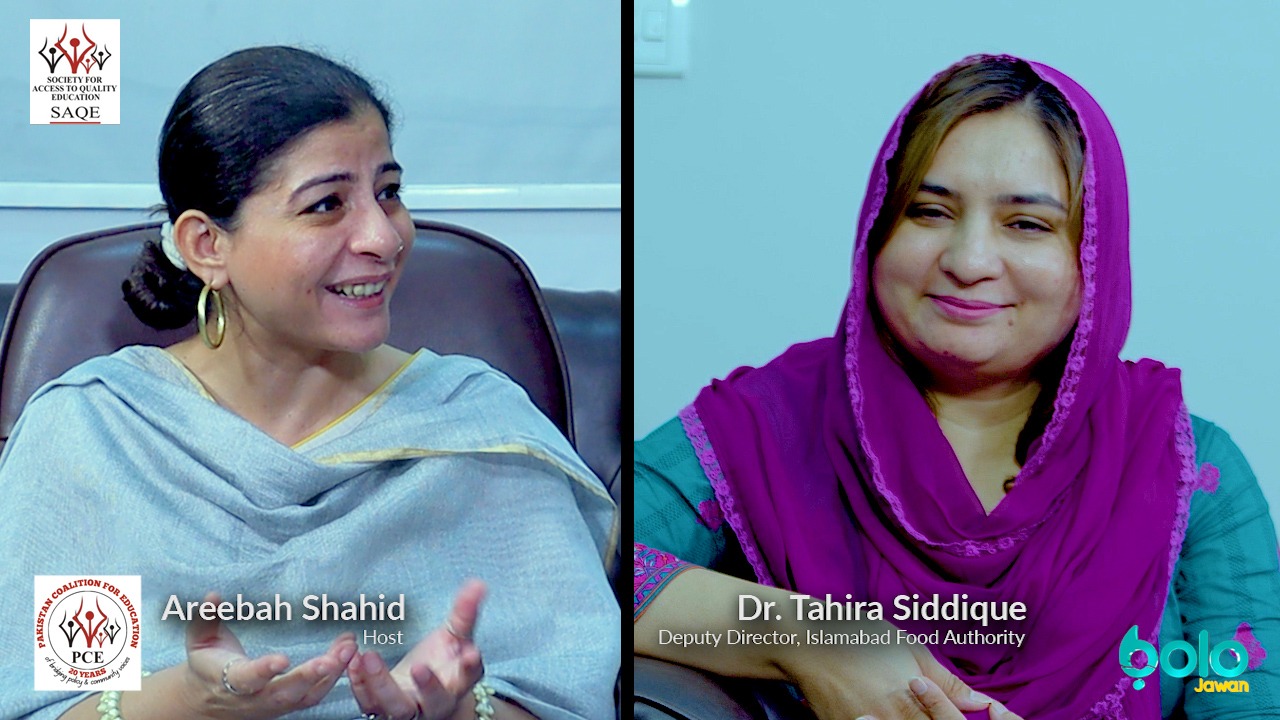
In the second episode of Season 4 of the podcast Let’s Talk Education, produced in collaboration with Society for Access to Quality Education and Pakistan Youth Change Advocates, host Areebah Shahid discusses this topic with Dr. Tahira Siddique, Deputy Director of the Islamabad Food Authority (IFA). The discussion offers a rare glimpse into how the School Meals Programme is helping improve student learning, health, and overall well-being.
“School meals are not only necessary for the physical development of the children but also for the development of their cognitive abilities, which have a direct link with learning outcomes,” Areebah notes.
Implemented across public schools in Islamabad, the program ensures every child receives one balanced meal daily, including essential foods like vegetables and roti, which support students’ concentration and memory.
Beyond food, this initiative ensures safety and quality standards. Dr. Tahira explains that the IFA regularly inspects production kitchens, monitoring quality standards of ingredients, and food storage protocols, especially during summers when the risk of food spoiling is higher.
The program uses an innovative traffic light system to address unhealthy eating habits. Green-coded foods (fruits, vegetables) are encouraged, yellow-coded foods (processed items) are allowed in moderation and red-coded foods (cola drinks) are strictly prohibited within the school vicinity.
During the episode, Dr. Tahira highlighted that the IFA has taken firm action to prevent the availability and sale of banned red-coded foods to students.
“We have banned cola, energy, and colored balls,” Dr. Tahira noted. “You won’t see these in any school in Islamabad. We’re also making sure there are no shops selling them to students nearby.”
Parents and the community members are encouraged to report violations to engage the community in accountability and monitoring. Dr. Tahira reassured viewers that the IFA upholds confidentiality in complaints, allowing concerned individuals to report the sale of prohibited food items without fear of being identified.
Dr. Tahira urged that parents can also play a crucial role by reducing their children’s exposure to sugary, packaged foods at home.
“The eating habits children learn at a young age stay with them. As parents, we must set the example.”
The initiative’s inter-departmental coordination also includes a gardening plan that aims to teach students healthier eating habits, promote teamwork and develop a sense of responsibility.
“If we promote small activities like kitchen gardening, it becomes a healthier habit,” she said. “You get healthier food, and children understand where their food comes from.”
In addition, the meals program aims to engage local producers by sourcing ingredients like vegetables and dairy from nearby farms and vendors. This approach ensures fresher, cost-effective meals, supports the local economy, and fosters community ownership. As Dr. Tahira shared, several local businesses are already contributing, making the program more sustainable and community-driven in the long run.
Watch the full episode now ⤵


