

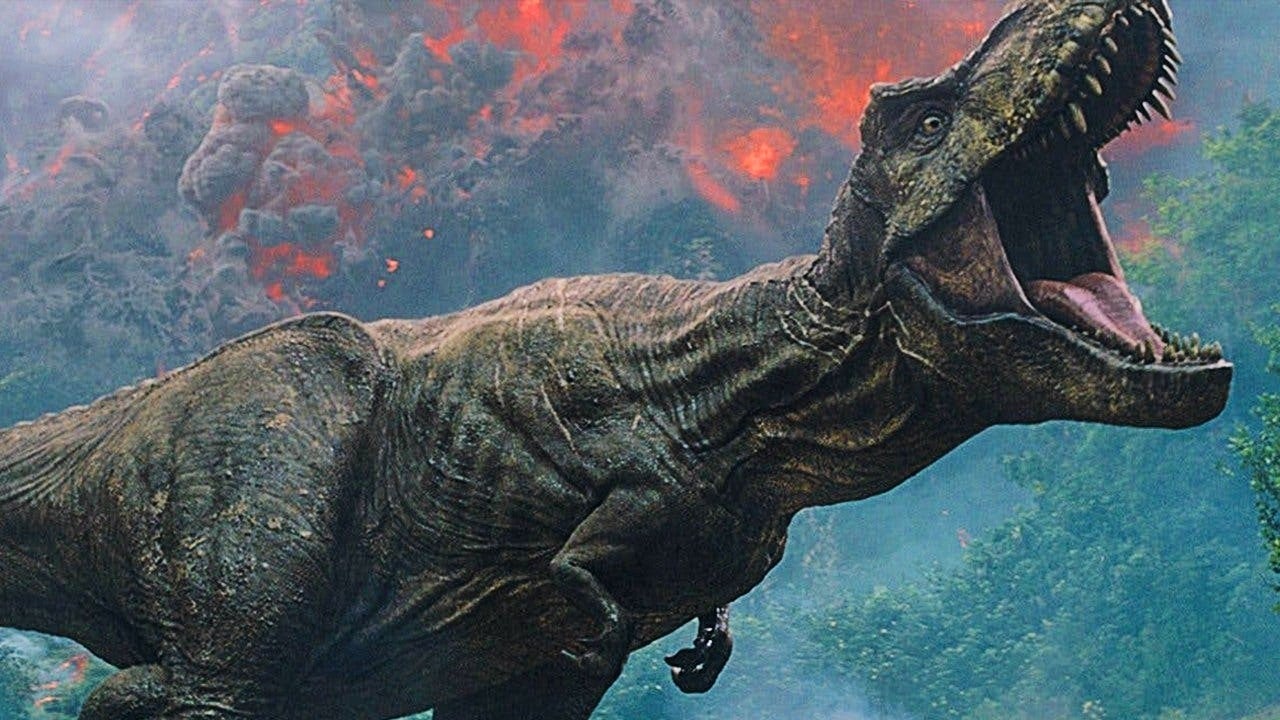
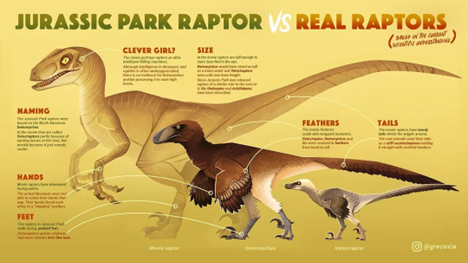
The Jurassic World (Park) movies are a part of cinematic history that fueled a generation’s obsession with dinosaurs. However, these movies are far from scientific fact and took major cinematic liberties for the “wow factor.” (Like the velociraptors with hands and wrists facing outwards instead of in, as the evidence proves.) These movies are a great watch, but if you plan on basing your dinosaur knowledge on them, you’d be mistaken.
The Feared Velociraptors
Velociraptor mongoliensis, more commonly known as the velociraptor, is one of the most recognizable faces from the Jurassic franchise. From the famous kitchen scene to the pack of raptors led by Owen Grady (Chris Pratt) , the movie raptors are 6-feet-tall and 10-feet-long.
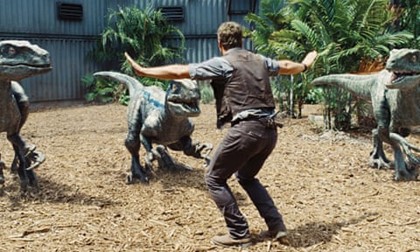
The actual raptor is around the size of a turkey, or 2 feet tall. The films make the already scary, deadly animal seem even scarier. However, the only similarity between the two is that if you see any, run!
The Mighty Tyrannosaurus Rex
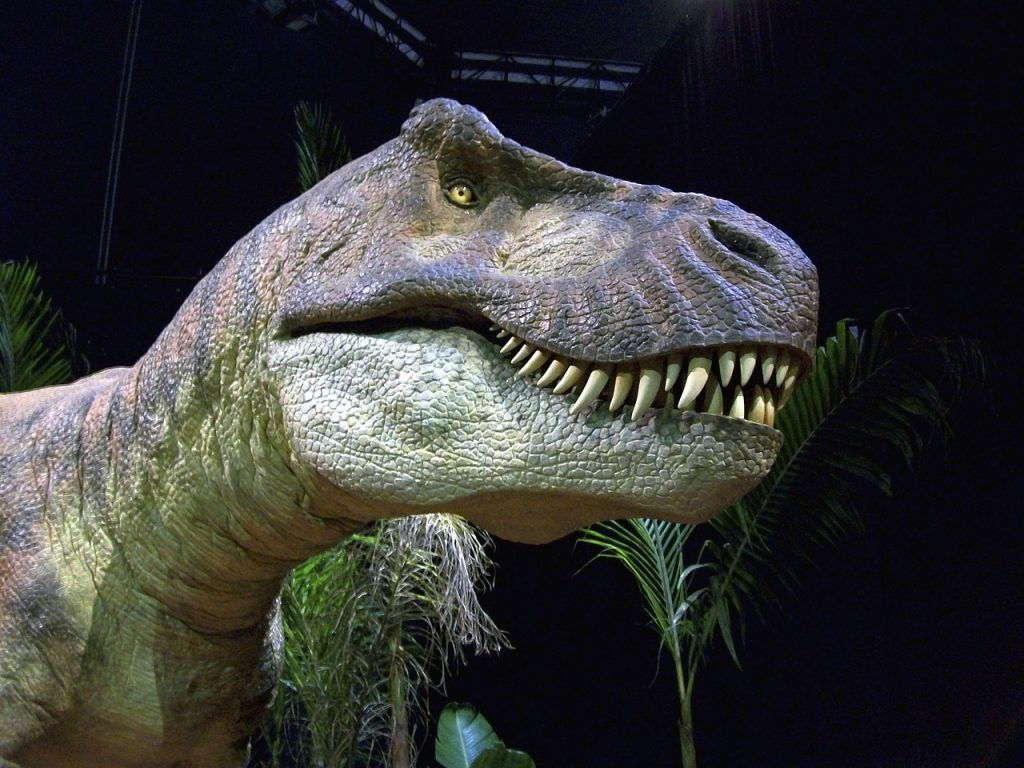
This next dinosaur is the most recognizable of them all. It’s the logo for the franchise after all! If you haven’t already guessed, it’s the Tyrannosaurus Rex, better known as the T. Rex (which stands for Tyrant Lizard King in Latin, which is already pretty cool!). At 20 feet tall and 40 feet long, the T. Rex is the size of an elephant. The films focus a lot on the fact that its eyesight is movement-based and weak.
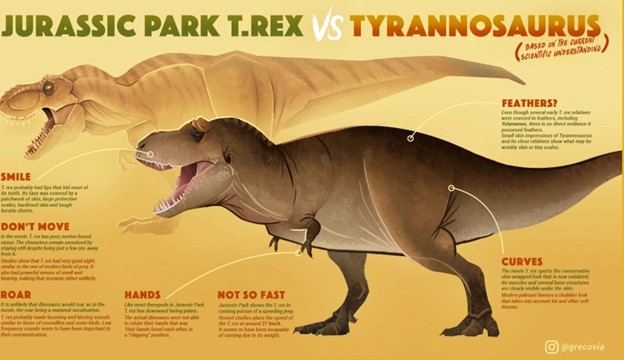
Actually, it was discovered that a T-Rex’s eyesight was almost as sharp as an eagle’s. Aside from that, the iconic roar of this dinosaur, which is in almost every film, was heavily exaggerated. The roar was a mix of an elephant, a tiger, and an alligator for dramatic effect. The T-Rex was feared throughout the land, and for good reason. So, if for some reason you were planning to visit the Cretaceous Period, I’d advise against it.
Other Inaccuracies
The films portray almost all the dinosaurs as scaly creatures, making their closest living relative seem like the reptiles of today. This, however, is inaccurate since it was discovered that dinosaurs, such as the Velociraptor, had feathers and resembled birds. If you run into the T.rex’s closest living relative, though, I wouldn’t worry much; evolution turned it into a chicken!
In the end, although these movies don’t accurately portray these fearsome creatures, they’re certainly worth a watch to immerse yourself in the possibility of co-existing with dinosaurs. If there’s one thing Jurassic Park – and Dr. Ian Malcom – got right, it’s that “life always finds a way.”


