

Ask a university student in Pakistan to name the difference between the National Assembly and the Senate, and you’ll often get a pause instead of an answer. This isn’t about any one student. It’s a system that talks about civic education constantly but rarely teaches how it works.
Research from the International Association for the Evaluation of Educational Achievement shows young people who understand how government works are also more likely to build stable careers, particularly in public service. Studies from Hong Kong to the United States confirm it: students who go through hands-on civic learning are significantly more likely to move into public sector and service-oriented careers after graduation.
What is missing in Pakistan’s civic education framework?
Pakistan hasn’t ignored civic education on paper. Pakistan Studies is compulsory from school through university, Civics is offered as an elective at intermediate level, and the Higher Education Commission has embedded two dedicated courses into every undergraduate degree. Parliament even passed the National Civic Education Commission Act in 2018.
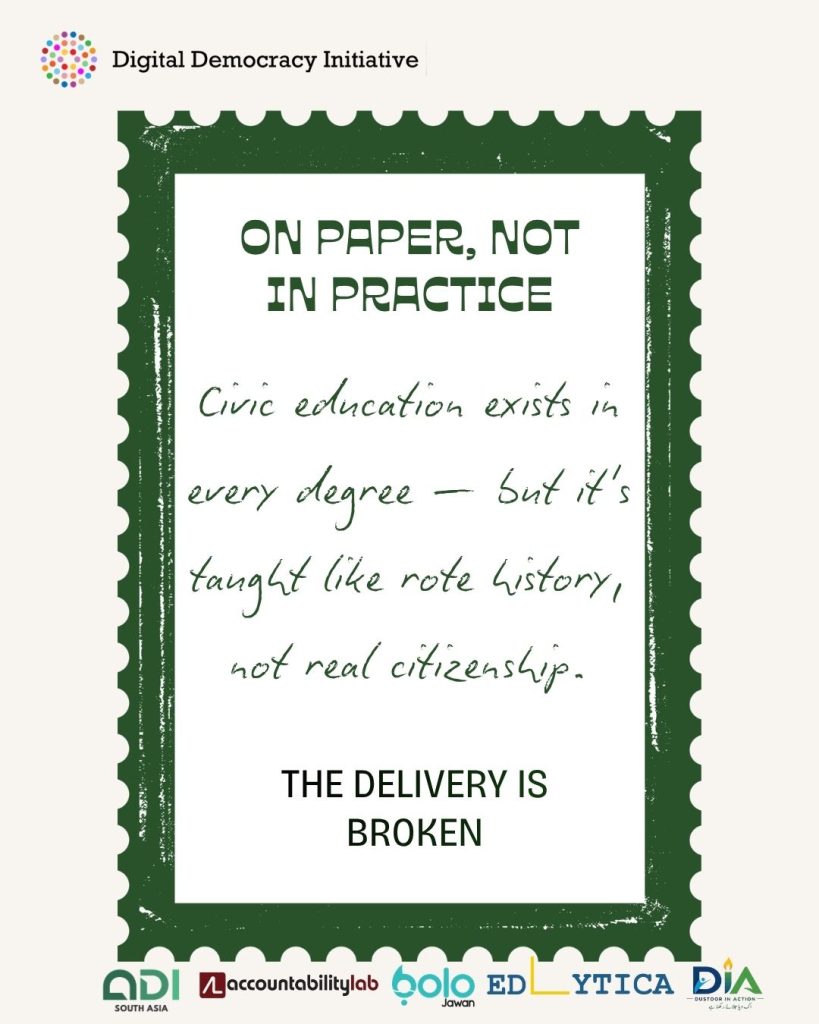
The problem is delivery. That Commission has never been constituted, seven years on. Civics reaches only a small share of students, mostly those not pursuing public service careers. And the two HEC courses are commonly taught the same way Pakistan Studies always has been: lecture, dictate, memorise, repeat.
Read: From Classrooms to Communities
How civic education works in other countries?
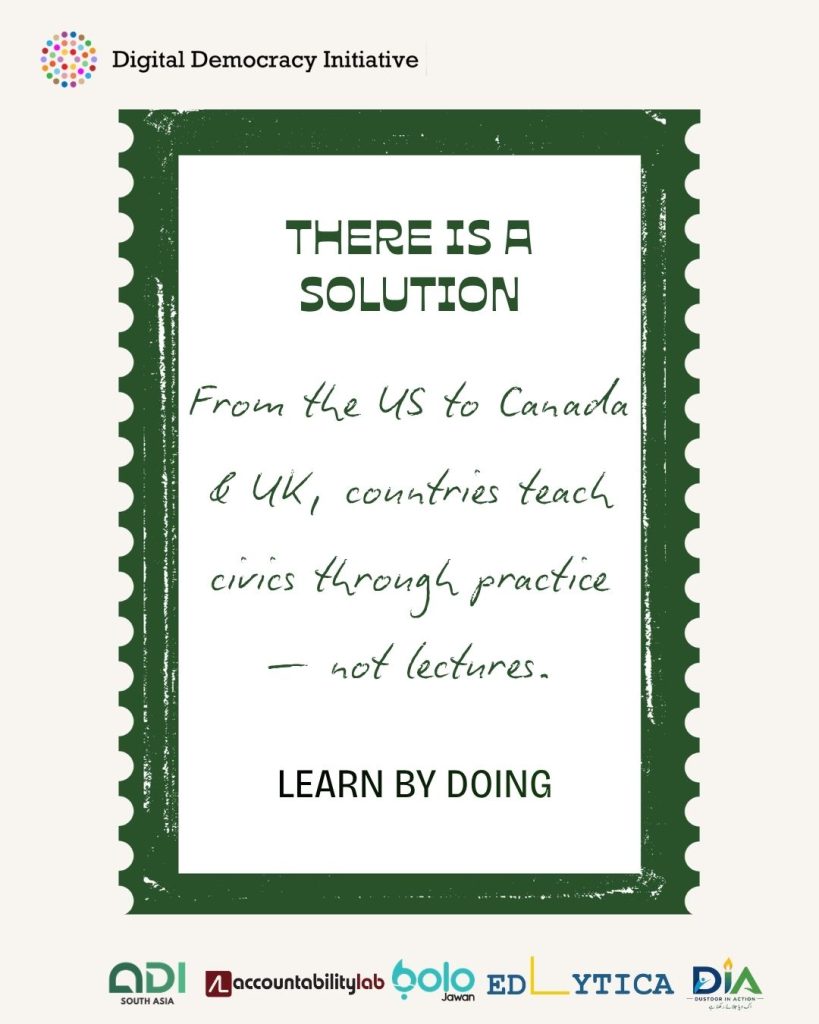
Pakistan isn’t the first country to hit this wall, and it doesn’t have to solve it alone. In the United States, iCivics, founded by former Supreme Court Justice Sandra Day O’Connor, teaches government through short browser games where students draft legislation or argue court cases, reaching nine million students a year. In Canada, Civix runs Student Vote, letting school students cast real ballots in parallel elections. In the UK, the Constitution Society makes an uncodified constitution accessible; in Latin America, DemoLab’s Freedom Academy teaches democracy through real case studies. The pattern is the same everywhere: civic knowledge sticks when people practise it, not when they’re told about it.
What does Dustoor in Action bring in this space?
This is the gap Dustoor in Action seeks to close. Run by Edlytica under the Digital Democracy Initiative South Asia, with support from Accountability Lab, it makes constitutional literacy something young Pakistanis experience, not just read about.
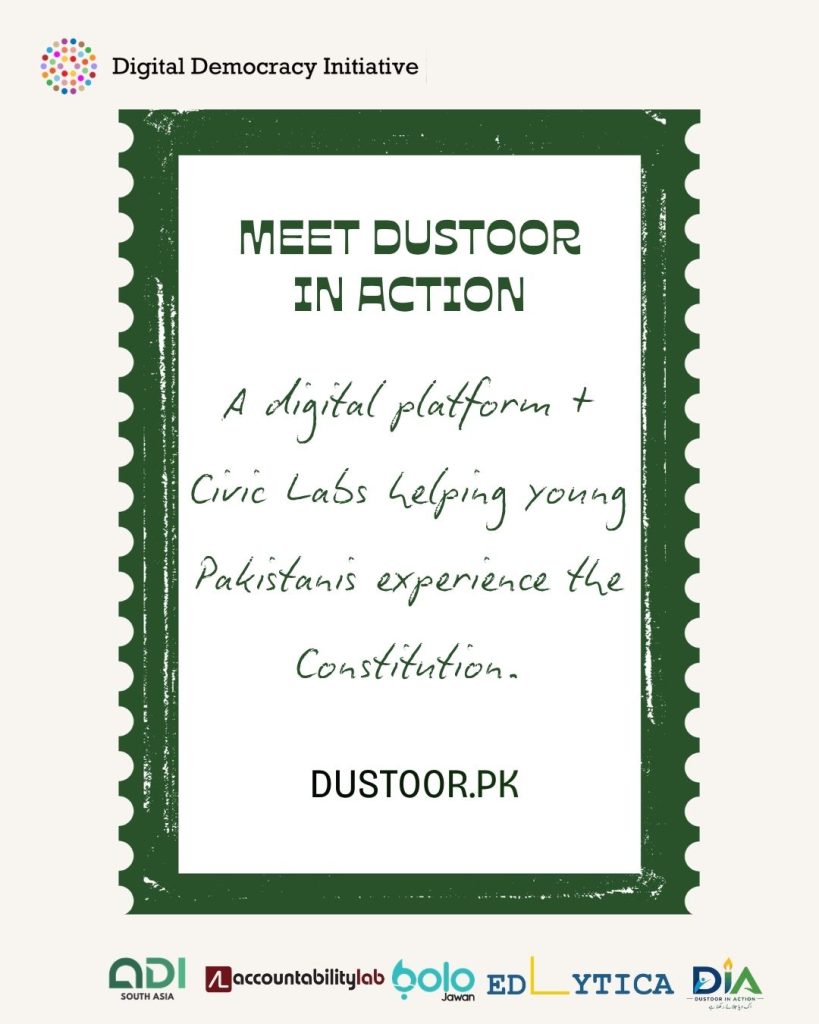
At its centre is dustoor.pk, a six-course micro-certification platform on the Constitution, Parliament, and civic participation, backed by a fully offline, searchable Constitution for areas with weak connectivity.
The other half is our Civic Lab, a 100-minute hands-on session where students compare Pakistan’s three constitutions, locate their own rights in the text, and sit paired before-and-after assessments so we can measure what actually changed. Every Lab closes with the Civic Hero Challenge, where student teams pitch a real,
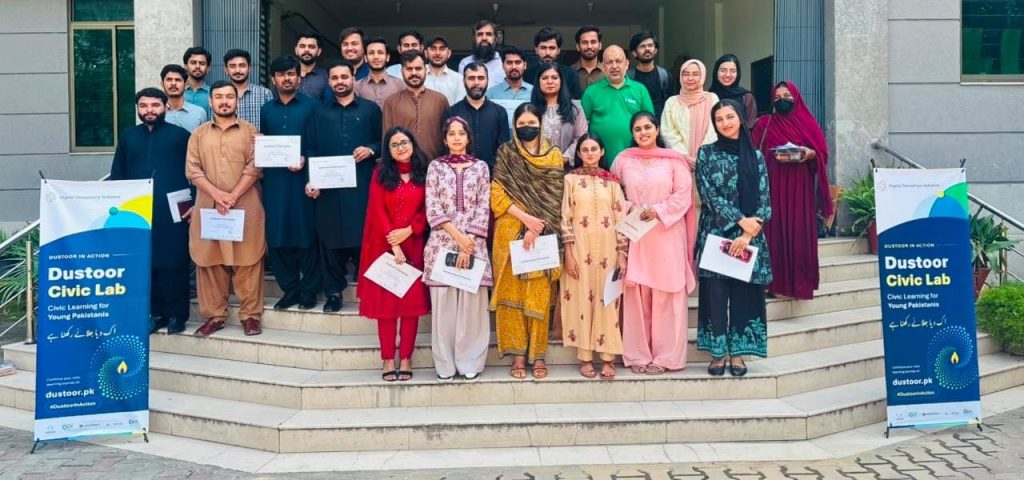
constitutionally grounded campaign to a panel of experts.
None of this reaches as far alone as it does through partnership. Edlytica’s collaboration with Bolo Jawan is carrying this same content, courses, offline Constitution, Civic Lab model, to young people who may never sit in the lecture halls where these courses are taught.
If you’re a student, teacher, or institution ready to help close this gap, dustoor.pk is open, and we’d love to hear from you.
!آئیے اپنے حصے کا اک دیا جلاتے ہیں


