

For a girl in Tharparkar, school is a place where she hopes to fulfil her dream of becoming a doctor. Her friend wants to become a lawyer. These aspirations reflect what education can make possible for children. But getting children into school is only the beginning. What happens after they enrol matters just as much. Are there enough teachers? Do children have classrooms where they can learn? And does school enrolment in Pakistan reflect the reality on the ground?
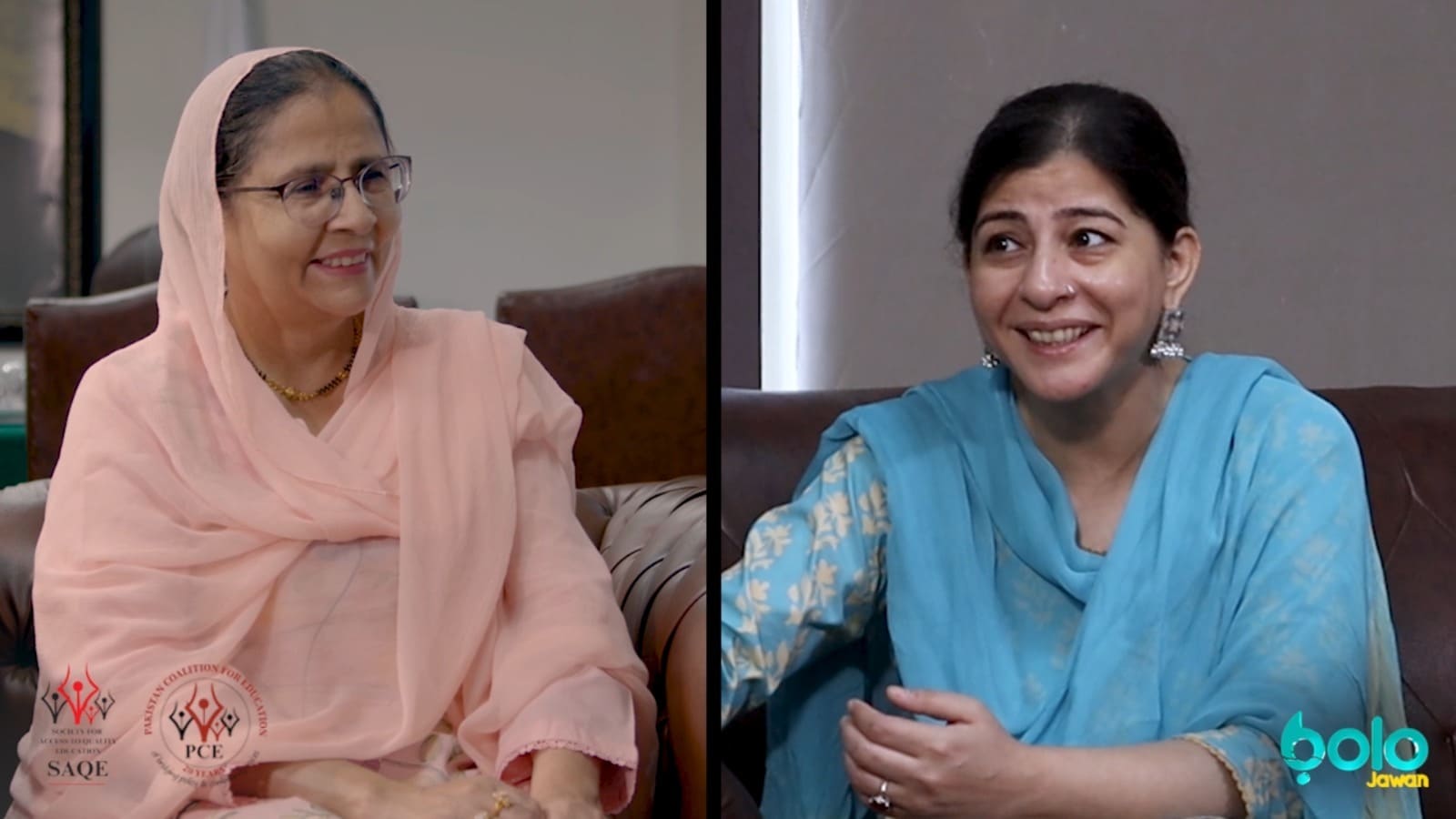
On Ep 11 of Season 4 of Let’s Talk Education, host Areebah Shahid, Executive Director at Pakistan Youth Change Advocates, spoke to Dr. Nikhat Shakeel, Convener of the Parliamentary Child Rights Caucus, about the reasons why children are not attending school, issues faced by children in accessing education, and the role that parliamentarians, government, and civil society can play in addressing these issues.
One Room, Multiple Grades
Improved access does not equate to quality. Dr. Nikhat pointed out the problem of multigrade classrooms where one teacher, with little support, teaches children of several grades in a single room.
“Children from Grades 1 to 5 are made to share a single classroom. Isn’t this unfair to them? What kind of education can they possibly receive under such conditions?” – Dr Nikhat Shakeel
Space in classrooms is not the only issue. A multi-grade teacher is required to spend a lot of time covering a variety of learning levels, frequently without the support needed or teaching materials. This makes it challenging to determine the learning gaps and provide attention to each child.
The National Education Policy Development Framework 2024 also recognizes the problems faced by teachers due to overcrowding and multi-grade classrooms in addressing learning gaps. Addressing these challenges requires needs-based teacher recruitment and deployment, adequate classrooms and learning materials to ensure quality education.
Enrollment Numbers That Don’t Tell the Whole Story
A higher number of children on enrolment lists may be interpreted as progress. Are those numbers actually for children who have enrolled in school and are in fact attending?
“There were enrolment drives to bring more children into government schools. However, I later discovered that many of these children were already enrolled in private schools. They were simply registered again in government schools during the campaign. Once the drive ended, they returned to their private schools, leaving government school enrolment largely unchanged.” – Dr Nikhat Shakeel
This prompts questions on the planning, verification and monitoring of enrolment campaigns. Registration does not ensure capacity to count. Education departments require reliable data to monitor attendance and retention, and to monitor grade progression and learning outcomes.
Who Is Going to Make It Happen?
“Article 25A tells us that every child should get an education. But who is going to execute it?” – Dr Nikhat Shakeel
The question highlights the discrepancy between commitment to the constitution and its on-the-ground impact. The law provides the right but there needs to be persistent action and accountability for the law to translate into practical results.
But as we explored in why Pakistan must rethink education planning, Parliament still works with very limited research support, and oversight can’t function without evidence. These commitments need to be translated into funded plans, functional schools, sufficient teachers, and effective monitoring systems, all to be implemented by the government departments. Civil society can contribute by conducting its own research, engaging in community work, and advocacy based on evidence.
Watch the full episode now!


